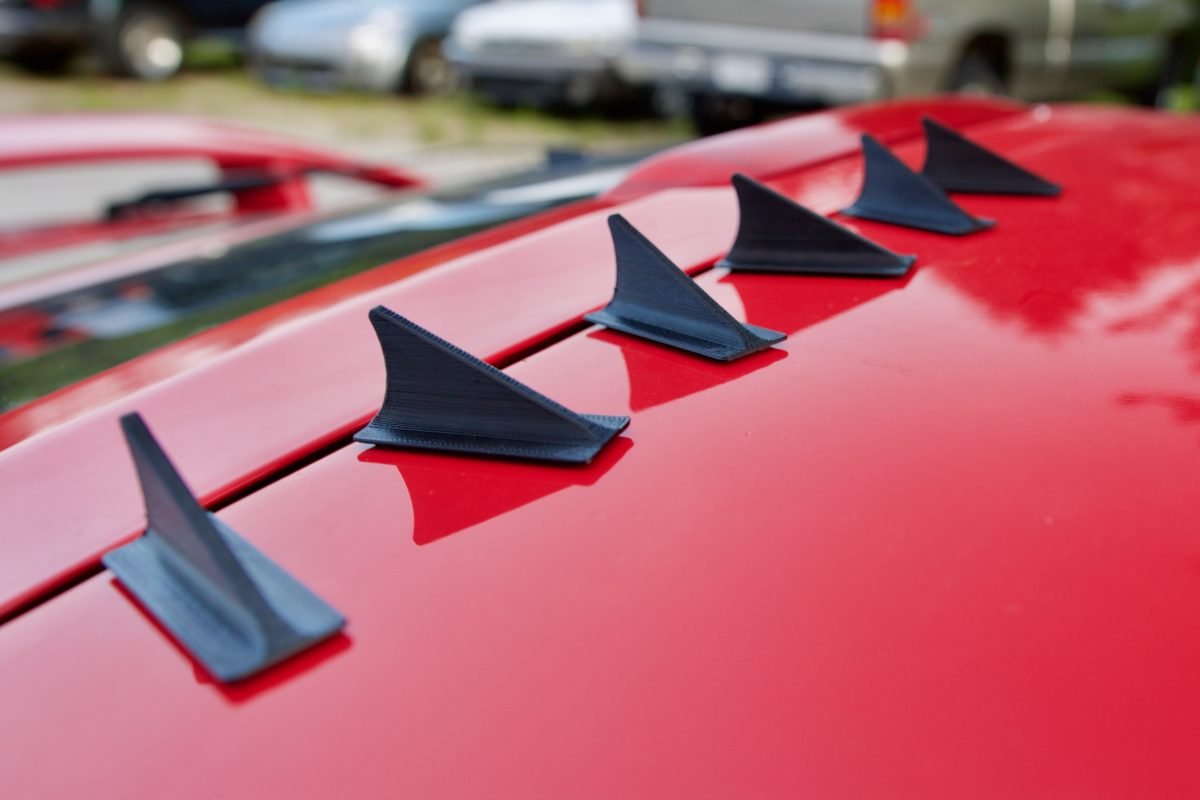
Few components in aviation are as unassuming yet profoundly impactful as vortex generators (VGs). These small, often overlooked fins, protruding from the surfaces of aircraft wings, fuselages, and tails, play a starring role in modern aerospace engineering. From ensuring the safety of a family on a commercial airliner to giving a military jet the edge in a dogfight, the applications of vortex generators in aircraft design are critical, subtly enhancing performance and significantly boosting safety across the entire spectrum of flight.
Think of them as tiny aerodynamic superheroes, constantly working to smooth out airflow, prevent disastrous stalls, and keep aircraft firmly under control, especially when conditions get tricky. They're a testament to how intelligent, subtle design can unlock massive gains in efficiency and operational capability.
At a Glance: Why Vortex Generators Matter
- Stall Prevention: VGs delay airflow separation, allowing wings to generate lift at higher angles of attack without stalling.
- Enhanced Control: They maintain attached airflow over control surfaces, ensuring pilots retain authority even in challenging conditions.
- Increased Safety: By reducing stall risk and improving stability, VGs significantly boost overall flight safety.
- Versatile Use: Found on general aviation planes, commercial jets, military aircraft, and specialized STOL designs.
- Performance Boost: Enable shorter takeoffs and landings, improve high-speed stability, and enhance maneuverability.
The Unseen Architects of Airflow: What Exactly Are Vortex Generators?
To truly appreciate vortex generators, we first need a quick lesson in airflow. Imagine air flowing smoothly over an aircraft wing. This smooth flow creates a thin layer of air right next to the surface called the "boundary layer." As the air moves along the wing, especially at higher angles of attack, it starts to slow down and lose energy. If it loses too much energy, it can detach from the wing's surface entirely – a phenomenon known as "airflow separation." When this separation occurs across a significant portion of the wing, the wing "stalls," losing its ability to generate lift, which is incredibly dangerous.
This is where VGs swoop in. These small, fin-like structures strategically protrude from the aircraft's surface, typically angled slightly into the airflow. Their purpose isn't to push air around but to mix it. As air flows over a VG, it creates a tiny, concentrated whirlpool of air – a vortex.
These vortices act like mini stirrers. They pull high-energy air from the fast-moving free-stream flow just above the boundary layer and inject it into the slower, lower-energy air within the boundary layer itself. This "energizing" process gives the tired boundary layer a much-needed boost, preventing it from slowing down and separating from the wing. By delaying this separation, VGs allow the wing to operate effectively at higher angles of attack without stalling, providing more lift and greater control.
A Deeper Dive: How VGs Energize the Boundary Layer
Think of it like this: if the boundary layer is a lazy river, VGs are little rapids that introduce turbulence. This isn't just any turbulence; it's controlled turbulence. The key is that these vortices are highly localized and intentional. They don't just randomly stir the air; they actively draw faster-moving, higher-momentum air from outside the boundary layer down into it. This influx of kinetic energy keeps the boundary layer attached to the wing's surface for longer, even as the wing's angle to the oncoming air becomes steeper.
Without VGs, increasing the angle of attack eventually leads to the airflow detaching, often starting from the trailing edge and moving forward, resulting in a sudden and dramatic loss of lift. VGs effectively push back this critical point, giving pilots a wider margin of safety and control, particularly during demanding flight maneuvers or critical phases like takeoff and landing. Understanding these fundamental aerodynamic principles is key to grasping the elegance of VG design.
Where VGs Take Flight: Real-World Applications Across Aircraft Types
Vortex generators aren't just a theoretical concept; they're a ubiquitous and essential component across virtually every sector of aviation. Their ability to manage airflow makes them invaluable for a range of performance and safety improvements.
Guiding Giants: Commercial Airliners
On commercial airliners like the ubiquitous Boeing 737 or the sleek Airbus A320, VGs are often less visible but no less critical. You'll frequently find them ahead of flaps, on the empennage (tail section), or near other control surfaces. During takeoff and landing, these massive aircraft operate at relatively low speeds and high angles of attack, which puts them closer to the stall region. VGs ensure that airflow remains attached to the wings and tail, maintaining critical lift and control authority. This is vital for safe operations, especially near stall speed or during turbulent conditions where unexpected control inputs might be needed. They help maintain the smooth, predictable flight characteristics passengers expect.
Masters of the Short Field: STOL Aircraft
Short Takeoff and Landing (STOL) aircraft are designed to operate from incredibly brief runways, often in remote or challenging terrain. For these planes, generating maximum lift at very low speeds is paramount. Mounted prominently on the leading edge of wings, VGs on STOL aircraft dramatically improve lift capabilities and delay stalls. This allows them to achieve phenomenal short-field performance, taking off and landing in spaces that would be impossible for conventional aircraft. Without VGs, the high lift coefficients required for STOL operations would be unattainable, making these aircraft far less capable. They are a core component in the design considerations for STOL aircraft.
Conquering the Sound Barrier: High-Speed and Transonic Flight
While commonly associated with low-speed stall prevention, VGs also play a crucial role in high-speed aerodynamics, especially in transonic and supersonic regimes. At these speeds, aircraft encounter shock waves – abrupt changes in air pressure and density that can cause significant airflow separation and energy loss. VGs are strategically placed to mitigate these issues.
By mixing high-energy air into the boundary layer, they help the airflow navigate the disruptive effects of shock waves, reducing energy loss and improving the effectiveness of control surfaces. For instance, the L-39 Albatros, a jet trainer and light attack aircraft, utilizes VGs on its horizontal stabilizer. This helps maintain pitch control at high speeds where localized transonic flow can occur, ensuring stability and maneuverability even when pushing the envelope.
Beyond the Wing: Stabilizers and Control Surfaces
VGs aren't limited to the main wing. They are often applied to horizontal and vertical stabilizers, which are essentially small wings themselves. Just like the main wing, these surfaces can experience airflow separation, leading to a loss of pitch or yaw control. By ensuring attached flow, VGs keep the aircraft stable and responsive, a critical factor for precision flying and recovery from unusual attitudes. Maintaining effective control surfaces under all flight conditions is one of the most critical aircraft safety features.
The High-Flying Advantages: Benefits You Can Count On
The strategic application of vortex generators translates into a host of tangible benefits for aircraft operators, designers, and, most importantly, passengers and pilots.
- Improved Stall Prevention: This is the marquee benefit. By actively energizing the boundary layer, VGs allow wings to maintain controlled airflow at higher angles of attack. This means pilots have a greater usable lift range before a stall occurs, significantly reducing the risk of an inadvertent stall at both low speeds (like during takeoff or landing approaches) and high speeds (during aggressive maneuvers). This translates directly into a safer flight envelope.
- Enhanced Stability and Maneuverability: By preventing airflow separation, VGs help maintain smooth and predictable aerodynamic forces across the aircraft. This leads to improved overall aircraft stability, particularly during critical flight phases or in turbulent air. Better stability directly contributes to better maneuverability, as the aircraft responds more predictably to control inputs.
- Better Control Surface Effectiveness: When airflow separates from the wing or tail, it often also separates from the ailerons, elevators, or rudder – the very surfaces used to control the aircraft. VGs ensure that airflow remains attached to these control surfaces even under extreme flight conditions, preserving the pilot's ability to steer, climb, descend, or roll the aircraft. This sustained control authority is paramount for effective stall recovery techniques and general flight safety.
- Increased Safety Margins: At its core, every application of VGs boils down to increasing safety. By reducing the likelihood of stalls, improving control response, and enhancing stability, VGs create a more forgiving and predictable flying machine. This added margin of safety is invaluable, offering pilots more time and opportunity to react to unexpected situations.
- Performance Optimization: Beyond safety, VGs can also be used to optimize performance. For instance, by allowing a wing to generate more lift at a given angle of attack, VGs can enable shorter takeoff rolls and landing distances, crucial for operations from smaller airports. They can also contribute to more efficient cruise flight by fine-tuning flow separation points to reduce drag in specific flight regimes.
Designing Your Own Vortices: Practical Tips for Placement and Performance
While professional aircraft design involves complex CFD (Computational Fluid Dynamics) simulations and extensive wind tunnel testing, the fundamental principles of VG design can be applied even to experimental or model aircraft. Understanding these guidelines can help you appreciate the meticulous engineering behind their placement.
- Shape Considerations: While engineers can optimize VG shapes for specific flow conditions, simple rectangular or triangular fins are often quite effective, especially for general applications. The key is creating that strong, localized vortex.
- Reynolds Number is Key: The Reynolds Number is a dimensionless quantity that helps predict flow patterns in different fluid situations. For VG design, you need to approximate or know the aircraft's stall speed to determine the Reynolds Number of the airflow over the wing. This helps determine the boundary layer characteristics you're trying to influence.
- Length Matters: The length of a VG (how far it protrudes along the chord, not its height) should typically be around 5-8% of the wing's chord length. This ensures it's long enough to effectively generate and sustain a vortex without becoming excessively drag-inducing.
- Strategic Location: Place the leading edge of your VGs at a specific distance back from the wing's leading edge. A good rule of thumb is approximately
(16% of the chord – VG length)back. This positions them just ahead of where the laminar boundary layer would naturally transition to turbulent, or, more importantly, just before the point where separation would likely begin without them. The ideal placement is about 16% back on the wing chord. - Height Within the Boundary Layer: For maximum effectiveness, the VG's height needs to be within the boundary layer itself. On larger aircraft, VGs are typically designed to be about 80% of the laminar boundary layer height before transition. For model aircraft, where boundary layers are very thin, a practical height like 1/8th of an inch (approx. 3 mm) might be sufficient, as precise calculation for tiny scales can be overly complex, and the boundary layer is proportionally thinner. The goal is to penetrate the boundary layer effectively without extending too far into the free stream, which would cause unnecessary drag.
- Span-wise Spacing and Angle:
- Spacing: VGs should be spaced at least two vortex radii away from each other. This prevents their individual vortices from interfering negatively with each other.
- Angle: Critically, VGs should be placed at an angle of about 15 degrees to the airflow. This yaw angle is what creates the strong, consistent vortex that mixes the air.
- Span-wise Placement for Controlled Stalls: Where you place VGs across the wing's span is as important as their individual placement. Placing them on the outboard 1/3rd to 1/2 span of the wing is a common and effective strategy. This ensures that the inboard sections of the wing stall first. Why is this good? Because when the inboard section stalls, the ailerons (typically on the outboard section) remain effective, allowing the pilot to maintain roll control during the initial phase of a stall. This results in a more gentle and controllable stall, alleviating dangerous "tip stalls" where the wingtips lose lift first, often leading to an uncontrolled roll.
- Material and Installation: For experimental or model aircraft, thin yet sturdy materials like poster board, plastic folders, or thin aluminum sheeting work well. For temporary or removable VGs, consider gluing them to a strip of scotch tape before applying the tape to the wing; this allows for easy removal and adjustment. Always use a guide to ensure precise alignment for optimal performance.
While complex equations for Reynolds Number, laminar boundary layer height, and vortex radius are utilized in professional design, practical experimentation and careful observation often complement these calculations, especially for non-standard applications or model aircraft where theoretical models may not fully capture complex flow dynamics. Mastery of advanced boundary layer control methods is a science in itself.
Common Questions About Vortex Generators
Even with their widespread use, VGs sometimes raise questions. Here are a few common ones:
Do VGs increase drag?
Yes, technically, any protrusion on an aircraft surface will cause some parasitic drag. However, the drag induced by VGs is typically very small and is vastly outweighed by the aerodynamic benefits they provide, especially in critical flight regimes. The improved lift, control, and stall characteristics they offer are far more valuable than the slight drag penalty. In many cases, VGs can even lead to reduced overall drag by preventing larger-scale flow separation that would cause far more drag.
Can I add VGs to any aircraft?
While VGs can be beneficial, adding them to a certified aircraft typically requires careful engineering analysis and potentially supplemental type certification (STC). Incorrectly sized, shaped, or placed VGs can actually worsen aerodynamic performance or introduce unforeseen control issues. For experimental or model aircraft, you have more freedom, but always start with proven designs and conduct thorough testing. It's not a "bolt-on and fly" solution for all situations.
What's the difference between VGs and wing fences?
Both VGs and wing fences aim to control airflow, but they do so differently. Wing fences are larger, vertical barriers that run chord-wise (from leading to trailing edge) along a wing. Their primary job is to prevent span-wise flow (air flowing from the root to the tip of the wing) and to control the propagation of a stall from the wing root outwards. VGs, on the other hand, are much smaller and create localized vortices to energize the boundary layer and delay separation across a broader area. Wing fences create a physical barrier; VGs create an energetic mixing of air.
Beyond the Basics: Pushing the Envelope in Aerodynamic Design
The story of vortex generators is a compelling chapter in the ongoing quest for safer, more efficient flight. From their initial development in the mid-20th century to their sophisticated applications on today's most advanced aircraft, VGs continue to be an unsung hero of the skies. They represent a prime example of how engineers leverage subtle interventions to manage the powerful, sometimes unpredictable, forces of aerodynamics.
As aviation continues to evolve, with new designs pushing the boundaries of speed, efficiency, and maneuverability, the principles embodied by vortex generators will remain relevant. Whether it's to enhance the performance of a drone, refine the flight characteristics of a future electric aircraft, or simply to make every flight a little bit safer, the concept of strategically manipulating airflow to unlock greater potential will endure. Dive deeper into this fascinating technology with The complete guide to vortex generators.